
On the job
Infection Control Basics Every CNA Should Know
Hand hygiene, standard and transmission-based precautions, the right order for PPE, and Enhanced Barrier Precautions in nursing homes.
By the CaregiverCert team · Updated October 24, 2026 · 7 min read
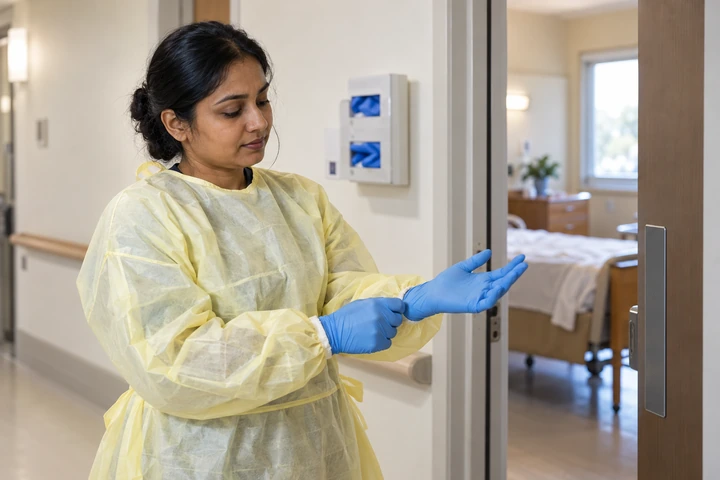
Nursing home residents are especially vulnerable to infections, and CNAs have more hands-on contact with them than almost anyone. Every nursing home must run an infection prevention program, including hand hygiene and precautions for staff (42 CFR 483.80). Here are the basics, from CDC guidance.
Hand hygiene
Clean hands are the single most important habit. According to the CDC:
- Alcohol-based hand sanitizer is preferred in most clinical situations, unless your hands are visibly dirty. Cover all surfaces and rub until dry, about 20 seconds.
- Use soap and water when hands are visibly soiled, before eating, after using the restroom, and during outbreaks of C. difficile or norovirus. Rub hands together for at least 15 to 20 seconds.
- Don’t miss your thumbs, fingertips, and the spaces between your fingers.
When to clean your hands
- Right before touching a resident
- Before a clean or aseptic task
- Before moving from a dirty body site to a clean one on the same resident
- After touching a resident or their surroundings
- After contact with blood, body fluids, or dirty surfaces
- Right after taking off gloves
Standard precautions: for every resident
Standard precautions assume that blood, body fluids, secretions, excretions (except sweat), broken skin, and mucous membranes may carry infection. You use them with every resident, whether or not they have a known infection. They include hand hygiene, wearing the right protective equipment for the task, cleaning equipment and surfaces, and respiratory hygiene, like covering coughs.
Transmission-based precautions
For some infections, you add extra precautions on top of standard precautions. The sign on the door tells you which:
| Type | Used for | What you wear |
|---|---|---|
| Contact | Germs spread by touching the resident or their surroundings, such as C. difficile, norovirus, and VRE | Gown and gloves for any contact with the resident or their room |
| Droplet | Germs spread by close respiratory contact, such as influenza and pertussis | A mask |
| Airborne | Germs that stay infectious in the air over long distances, such as tuberculosis, measles, and chickenpox | A respirator such as an N95, depending on the disease; the resident is in a special negative-pressure room |
Source: CDC Guideline for Isolation Precautions (2007).
Putting on and taking off PPE
The order matters, especially when taking PPE off, because that’s when you can contaminate yourself. CDC’s sequence:
| Putting on | Taking off (one CDC method) |
|---|---|
| 1. Gown | 1. Gloves |
| 2. Mask or respirator | 2. Goggles or face shield |
| 3. Goggles or face shield | 3. Gown |
| 4. Gloves (over the gown cuffs) | 4. Mask or respirator |
| 5. Clean your hands |
Take off all PPE before leaving the room, except a respirator, which you remove after leaving and closing the door. Clean your hands right after removing PPE, and in between steps if your hands get contaminated.
Enhanced Barrier Precautions (EBP)
Since April 1, 2024, CMS expects nursing homes to use Enhanced Barrier Precautions for residents with certain multidrug-resistant organisms, and for residents with chronic wounds or indwelling devices like urinary catheters or feeding tubes. EBP means wearing a gown and gloves during high-contact care:
- Dressing, bathing or showering, and transferring
- Providing hygiene and changing linens
- Changing briefs or helping with toileting
- Device care and wound care
Unlike contact precautions, residents on EBP aren’t restricted to their rooms or kept from group activities. Change your gown and gloves before caring for another resident.
Frequently asked questions
Is hand sanitizer enough for CNAs?
In most situations, yes. The CDC prefers alcohol-based hand sanitizer unless hands are visibly dirty. Use soap and water when hands are soiled, before eating, after the restroom, and during C. diff or norovirus outbreaks.
What is the correct order to take off PPE?
One CDC method: gloves, then goggles or face shield, then gown, then mask or respirator, then clean your hands.
What are Enhanced Barrier Precautions?
A CMS and CDC approach for nursing homes that requires a gown and gloves during high-contact care for residents with certain resistant organisms, chronic wounds, or indwelling devices.
How long should a CNA wash their hands?
At least 15 to 20 seconds of rubbing with soap and water. CDC says either time is acceptable.