
Career guide
CNA vs HHA vs PCA: Which Caregiver Job Is Right for You?
All three help people with daily care. The differences are in training, where you work, what you are allowed to do, and pay.
By the CaregiverCert team · Updated October 24, 2026 · 7 min read
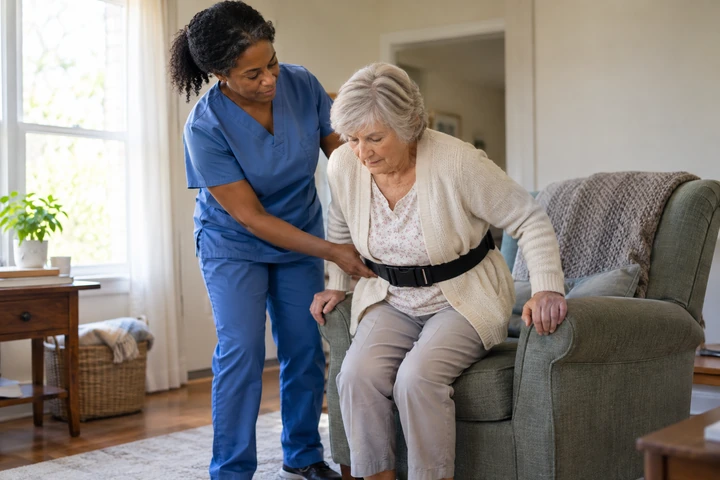
If you want to work in caregiving, you will see three job titles over and over: certified nursing assistant (CNA), home health aide (HHA), and personal care aide (PCA). They overlap a lot, but the rules behind each one are different. This guide compares them side by side so you can pick the one that fits your goals.
The quick comparison
| CNA | HHA | PCA | |
|---|---|---|---|
| Federal minimum training | 75 hours, including 16 hours of supervised practical training | 75 hours, including 16 hours of supervised practical training | No federal minimum. States set their own rules. |
| Test required | Yes, a state written (or oral) and skills exam | Yes, a competency evaluation | Depends on the state and employer |
| Official record | State nurse aide registry | Agency records; some states certify HHAs | Usually agency records only |
| Main workplaces | Nursing homes, hospitals, assisted living | Clients’ homes, through home health and hospice agencies | Clients’ homes, assisted living, private families |
| National median pay (May 2025) | $20.32 an hour | $17.21 an hour* | $17.21 an hour* |
*The U.S. Bureau of Labor Statistics reports home health aides and personal care aides together. Federal training rules: 42 CFR 483.152 (CNA) and 42 CFR 484.80 (HHA).
Certified nursing assistant (CNA)
A CNA works under a nurse, usually in a nursing home or hospital. CNAs help residents bathe, dress, eat, move safely, and use the bathroom. They also take vital signs, watch for changes in a person’s condition, and report them to the nurse.
Training: Federal rules require a state-approved program of at least 75 hours, with at least 16 hours of supervised practical training. Many states require more. California requires 160 hours and Missouri requires 175. After training, you pass a state exam with a written (or oral) part and a skills part, and your name goes on the state nurse aide registry.
Why people choose it: It pays the most of the three, it is accepted almost everywhere in health care, and it is a common first step toward LPN or RN school.
Home health aide (HHA)
A home health aide gives personal care to clients in their own homes, working for a home health or hospice agency. Tasks look a lot like a CNA’s: bathing, dressing, moving safely, and basic health checks. The big difference is the setting. You often work alone in the home, with a registered nurse supervising from the agency.
Training: For agencies that bill Medicare or Medicaid, federal rules require at least 75 hours of training, with at least 16 hours of supervised practical training, plus a competency evaluation. Aides need at least 12 hours of in-service training every 12 months. A CNA who is in good standing on a state registry also meets the federal training rule.
A few states go further and certify home health aides themselves. California, New Jersey, and Kansas are examples. Kansas requires you to be a CNA first and then finish a 20-hour home health aide course.
Tip: If you are already a CNA, check your state’s rules before paying for separate HHA training. In many states you already qualify.
Personal care aide (PCA)
Personal care aides help people with daily living: bathing, dressing, meals, light housekeeping, errands, and companionship. PCAs usually don’t do health-related tasks like taking vital signs, which are left to aides with more training.
Training: There is no single federal training standard for personal care aides. Each state sets its own rules, often through its Medicaid home care programs. New York, for example, requires at least 40 hours of training in a state-approved program. Some private-pay jobs require only employer training.
Why people choose it: It is usually the fastest way to start working in caregiving, and many PCAs later move up to HHA or CNA.
Which one pays the most?
CNAs earn the most. Nationally, nursing assistants earned a median of $20.32 an hour in May 2025, compared with $17.21 for home health and personal care aides, according to the Bureau of Labor Statistics. Pay depends a lot on your state. See our CNA salaries by state page for local numbers.
How to choose
- You want the most job options and higher pay: become a CNA. It also qualifies you as a home health aide in most states.
- You prefer one-on-one care in people’s homes: home health aide is a strong fit. If your state accepts CNAs as HHAs, getting your CNA covers both.
- You want to start working as soon as possible: a PCA job may let you start after a short training, and you can move up later.
- You plan to go to nursing school: start with CNA. Many nursing programs value or require CNA experience.
Frequently asked questions
Can a CNA work as a home health aide?
Usually, yes. Federal rules let Medicare and Medicaid home health agencies hire CNAs who completed a state-approved program and are in good standing on a state nurse aide registry. Some states, like Kansas, add extra steps, so check your state first.
Is a PCA the same as a caregiver?
“Caregiver” is a general word for anyone who provides care. A personal care aide is a specific job, usually with state training rules if it is paid through Medicaid.
Which job is easiest to get?
Personal care aide jobs usually have the shortest training. CNA takes the most training but opens the most doors.
Do home health aides need a license?
Most states don’t license home health aides, but agencies that bill Medicare or Medicaid must follow federal training and testing rules. A few states, such as California and New Jersey, certify home health aides.
Keep reading
- 42 CFR 483.152, Requirements for approval of a nurse aide training program
- 42 CFR 484.80, Home health aide services
- U.S. Bureau of Labor Statistics, Occupational Employment and Wages, May 2025
- New York State Department of Health, Guide to operating a Personal Care Aide Training Program
- K.A.R. 28-51-113, Kansas home health aide qualifications