
Career growth
How to Become a Medication Aide: Requirements by State
Which states let aides give medications, what the credential is called, how much training it takes, and whether you must be a CNA first.
By the CaregiverCert team · Updated October 24, 2026 · 8 min read
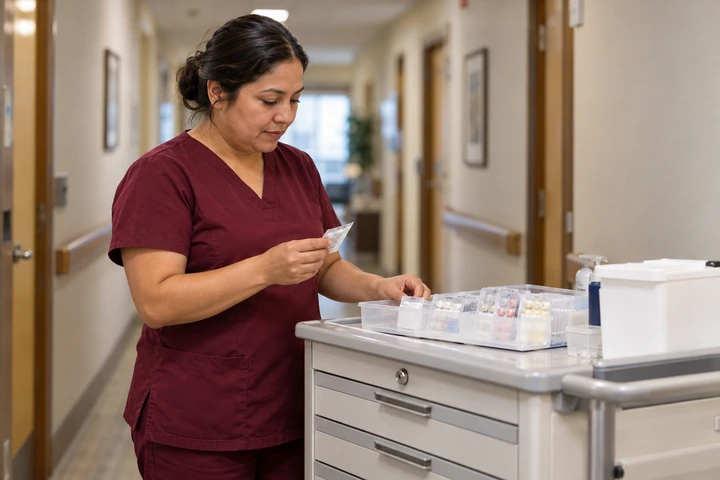
A medication aide is an unlicensed caregiver, usually an experienced CNA, who is trained to give certain routine medications under a nurse’s supervision. It’s a popular next step because it adds skills and often pay without years of school. But the rules are entirely state-by-state: in our October 2026 check, 44 of the 50 states and DC had some form of medication aide role, and 7 had no medication aide credential, though some of those allow other medication roles (see below).
What medication aides do
Medication aides typically give routine oral and topical medications, such as pills, eye drops, and creams, to residents whose conditions are stable, following a nurse’s direction. They usually can’t give injections or IV medications, or make judgment calls about medications. The exact list depends on your state and the setting, and many states limit medication aides to certain facilities, such as nursing homes or assisted living.
States with no medication aide credential
These states don’t have a medication aide credential for nursing homes: Alaska, California, Connecticut, Hawaii, Illinois, Mississippi, New York. Some still allow other medication roles. New York’s Advanced Home Health Aides can give certain medications in home care, hospice, and enhanced assisted living. Connecticut certifies unlicensed staff to give medications in residential care homes. Alaska and Illinois let nurses delegate some medication tasks to trained staff in certain settings.
Requirements by state
| State | Title | Minimum training hours | Must you be a CNA first? | Where it applies |
|---|---|---|---|---|
| Alabama | Medication Assistant, Certified | Not set in state rule | No | |
| Arizona | Certified Medication Assistant | 100 | Yes, plus 6 months of work | |
| Arkansas | Medication Assistant-Certified | 115 | Yes | |
| Colorado | Certified Nurse Aide with Medication Aide Authority | 100 | Yes, plus 1,000 work hours | |
| Delaware | Limited Lay Administration of Medications | Not set in state rule | No | Not used in nursing homes |
| Florida | Qualified Medication Aide | 40 | Yes, certified at least 1 year | Nursing homes only |
| Georgia | Certified Medication Aide | Not set in state rule | Yes | Assisted living |
| Idaho | Medication Assistant-Certified | 100 | Yes | |
| Indiana | Qualified Medication Aide | 100 | Yes, plus 1,000 work hours | |
| Iowa | Certified Medication Aide | 50 | No | |
| Kansas | Certified Medication Aide | 75 | Yes | |
| Kentucky | Certified Medication Aide I/II (CMA I, CMA II); Kentucky Medication Aide (KMA) | 100 | Usually, with 6 months of work | |
| Louisiana | Medication Attendant Certified | 120 | Yes, plus 1 year of work | |
| Maine | CNA-Medication Aide (CNA-M); also Certified Residential Medication Aide (CRMA) | Not set in state rule | Yes, for CNA-M | |
| Maryland | Certified Medicine Aide (CMA) for nursing homes; Certified Medication Technician (CMT) for assisted living | 60 | Yes, plus 1 year of work (CMA) | |
| Massachusetts | Certified Medication Aide | Not set in state rule | Yes | New role (2026) |
| Michigan | Medication Aide | Not set in state rule | Yes, plus 2,000 work hours | Nursing homes (new law) |
| Minnesota | Medication Aide | Not set in state rule | Must finish CNA training | Training, no state certificate |
| Missouri | Certified Medication Technician (CMT); also Level I Medication Aide (LIMA) for assisted living/RCF | 68 | Yes, plus 6 months of work | |
| Montana | Medication Aide I (assisted living) and Medication Aide II (long-term care) | Not set in state rule | Yes, plus 1,000 work hours (MA II) | |
| Nebraska | Medication Aide | 40 | No | |
| Nevada | Medication Aide – Certified | 100 | Yes, plus 1 year of work | |
| New Hampshire | Medication Nursing Assistant | Not set in state rule | Yes (LNA) | |
| New Jersey | Certified Medication Aide | Not set in state rule | Yes (CNA, CHHA, or PCA) | Assisted living |
| New Mexico | Certified Medication Aide (CMA I / CMA II) | 80 | CNA or 3 months of health care work | |
| North Carolina | Medication Aide | 24 | Yes | |
| North Dakota | Medication Assistant I and Medication Assistant II | 80 | Yes | |
| Ohio | Certified Medication Aide | 120 | Yes for nursing homes; residential care: CNA or 1 year of direct care | |
| Oklahoma | Certified Medication Aide | 40 | Yes | |
| Oregon | Certified Medication Aide | 84 | Yes, plus 6 months of work | |
| Pennsylvania | Medication administration-trained staff | Not set in state rule | No | Not a certification; personal care homes and assisted living |
| Rhode Island | Medication Aide | 45 | Yes | |
| South Carolina | Medication Assistant | 100 | No | Nursing homes only (new in 2026) |
| South Dakota | Unlicensed Medication Aide | Not set in state rule | No | |
| Tennessee | Certified Medication Aide | Not set in state rule | Yes, plus 1 year of work | |
| Texas | Medication Aide | 140 | Must work as a nurse aide or direct care staff | |
| Utah | Medication Aide Certified | 100 | Yes, plus 2,000 work hours | |
| Vermont | Medication Nursing Assistant | Not set in state rule | Yes (LNA) | |
| Virginia | Registered Medication Aide | 68 | No, several training routes qualify | Assisted living only |
| Washington | Medication Assistant Certification Endorsement | 100 | Yes, plus 1,000 work hours | Nursing homes |
| Washington, DC | Medication Aide-Certified | Not set in state rule | Yes (or HHA), plus 1 year of work | |
| West Virginia | Approved Medication Assistive Personnel | Not set in state rule | Yes, plus 1 year of work (nursing homes) | |
| Wisconsin | Medication Aide | Not set in state rule | Yes, plus 2,000 hours of care | |
| Wyoming | Medication Aide-Certified | Not set in state rule | Yes, CNA II |
From each state’s board of nursing, health department, or regulations, checked October 2026. “Not set in state rule” means the state approves programs without a fixed hour minimum in its rules; ask the program. Most states also require a state exam. Rules change; confirm with your state before you enroll.
Common requirements
- Experience as a CNA. Many states require 6 months to 1 year of work, or a set number of hours like 1,000 or 2,000.
- Age and education. Many states require you to be at least 18 with a high school diploma or GED.
- Approved training. Usually classroom, skills lab, and supervised clinical practice. Several states use the national medication aide curriculum from NCSBN.
- An exam. Most states require a state or national medication aide exam, such as the NCSBN Medication Aide Certification Exam (MACE).
- Employer support. Some states require a recommendation from your director of nursing or administrator.
Is it worth it?
For many CNAs, yes. You build clinical skills, take on more responsibility, and may earn more, depending on your employer. It can also be a stepping stone toward becoming an LPN. Ask your employer whether they pay for medication aide training. Some facilities do.
Frequently asked questions
What is the difference between a CMA and a QMA?
They are different names for similar roles. States use titles like Certified Medication Aide (CMA), Qualified Medication Aide (QMA), and Certified Medication Technician (CMT).
Do you have to be a CNA to become a medication aide?
In most states, yes, and many also require work experience. Several, such as Iowa and Nebraska, don’t require a CNA.
How long is medication aide training?
It varies by state, from 24 hours in North Carolina to 140 hours in Texas. Many states require about 100 hours.
Can medication aides give injections?
Generally no. Medication aides usually give routine oral and topical medications under a nurse’s supervision. Check your state’s rules.