The Silent Struggle: Addressing Mental Health and Burnout in CNAs
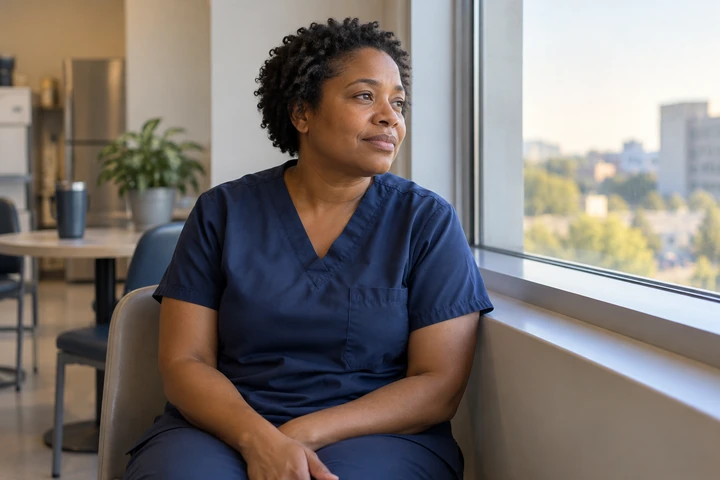
Burned out CNA sitting in hospital hallway

The Silent Struggle: Addressing Mental Health and Burnout in CNAs

Certified Nursing Assistants are the backbone of American healthcare โ€” providing up to 90% of direct resident care in nursing homes, and showing up shift after shift with physical and emotional energy that most people couldn't sustain for a week, let alone a career. Yet burnout and mental health challenges in this profession have reached a level that can no longer be ignored.

This article is for every CNA who has ever felt exhausted in a way that sleep doesn't fix. It's also for facilities, administrators, and anyone who cares about the people who care for others.

What Is Burnout โ€” And Why Are CNAs So Vulnerable?

Burnout is not just being tired after a hard shift. According to the World Health Organization, burnout is a syndrome that results from chronic workplace stress that has not been successfully managed. It shows up in three distinct ways:

  • Emotional exhaustion โ€” feeling drained, empty, and depleted at an emotional level
  • Depersonalization โ€” becoming detached from patients, almost robotic, or viewing people as tasks rather than human beings
  • Reduced personal accomplishment โ€” feeling like nothing you do makes a difference

CNAs are especially vulnerable because of how their work is structured. The physical demands are relentless: lifting, transferring, bathing, and repositioning patients for hours on end. The emotional demands are equally heavy โ€” deep bonds form with patients, and witnessing suffering, decline, and death on a regular basis takes a toll that accumulates over time.

Exhausted CNA team in break room

Replace with a real photo of CNAs at your facility or a licensed stock image

The Numbers Behind the Crisis

This is not a small or isolated problem. The data paints a clear picture of a workforce under serious strain.

41.8% CNA hospital turnover rate in 2024 โ€” up from 33.7% in 2022
81% of nurses have experienced burnout at some point in their careers
70%+ of CNAs attribute their burnout directly to nursing staff shortages
35% of CNAs care for 15โ€“20 patients per shift โ€” often alone
๐Ÿ“Š CNA Turnover Rate: 2022 vs. 2024
2022 Turnover Rate33.7%
33.7%
2024 Turnover Rate41.8%
41.8%

Source: NSI National Health Care Retention & RN Staffing Report, 2024

๐Ÿ“Š Burnout Prevalence Among Nurses & CNAs
Ever experienced burnout81%
Currently at risk of burnout62%
62%
Emotional exhaustion (global)33%
33%
Considering leaving the profession23%
23%

Sources: ShiftKey Healthcare Burnout Report; Nurse.com 2024 Work-Life Report; PMC Global Nurse Burnout Review 2025

These are not abstract numbers โ€” they represent real people leaving a profession they once loved because the system around them failed to keep up with what the job actually demands.

Warning Signs of Burnout in CNAs

One of the most dangerous aspects of burnout is that it creeps up slowly. Many CNAs dismiss early warning signs as simply "part of the job." Knowing what to look for โ€” in yourself or a colleague โ€” can make a real difference.

๐Ÿ’› Emotional Signs

  • Dreading work most days
  • Feeling numb toward patients
  • Increased cynicism or irritability
  • Crying more easily
  • Persistent hopelessness about your role

๐Ÿ”ด Physical Signs

  • Chronic fatigue that rest doesn't fix
  • Frequent headaches or muscle tension
  • Trouble sleeping when exhausted
  • Getting sick more often than usual
  • Stomach problems or chest tightness

๐Ÿ”ต Behavioral Signs

  • Calling in sick more frequently
  • Withdrawing from coworkers or family
  • More mistakes or difficulty focusing
  • Using substances to decompress
  • Losing interest in things you enjoyed

"If several of these feel familiar, it does not mean you are weak or not cut out for this work. It means you are human โ€” and the demands placed on you may have exceeded what anyone could handle without support."

The Role of Workplace Violence

This topic does not get nearly enough attention. Verbal and physical abuse from patients and their families is a significant and underreported driver of CNA burnout.

Studies consistently show that CNAs in long-term care and acute care settings face elevated rates of aggression โ€” including being hit, kicked, bitten, and subjected to verbal threats. CNAs who experience repeated workplace violence suffer lasting psychological harm, including anxiety, post-traumatic stress, and accelerated burnout.

The fact that this abuse is often treated as "just part of the job" is itself part of the problem. It normalizes something that should never be normalized, and it sends the message that a CNA's safety and dignity matter less than keeping things moving on a unit.

The Respect Gap

Beyond physical safety, there is a deeper issue that research has identified as one of the most powerful drivers of CNA burnout: a lack of respect and recognition.

CNAs frequently report feeling invisible within healthcare teams. Despite providing the majority of hands-on patient care, they are often left out of care discussions and treated as lower in status than their contributions deserve. Research has found that the disrespect CNAs experience from supervisors can cause greater job dissatisfaction and burnout than low pay or workload stress alone.

This matters because it means the solution is not only financial. Facilities that build a culture where CNAs feel valued and heard will see measurable improvements in retention โ€” even before changing compensation.

Strategies for CNAs: What You Can Do Right Now

CNA taking a mindful self-care break with tea

While systemic change is necessary, there are meaningful steps individual CNAs can take to protect their mental health.

  • Prioritize real recovery between shifts. Rest is not laziness. Your body and mind are doing demanding work and need genuine downtime โ€” not just scrolling your phone in exhaustion.
  • Build a support network. Connecting with other CNAs who understand the work is powerful. Peer support โ€” formal or informal โ€” reduces the isolation that accelerates burnout.
  • Seek professional mental health support. Therapy is not just for crises. Many employers offer Employee Assistance Programs (EAPs) with free, confidential counseling sessions.
  • Practice compassionate detachment. Caring deeply while maintaining emotional boundaries is a skill โ€” not a character flaw. It is what makes long careers in care possible.
  • Explore advancement when you're ready. Moving into nursing, medical coding, or healthcare administration is not giving up. It is a legitimate response to needing change.

What Facilities and Employers Must Do

Burnout among CNAs is not primarily an individual problem. It is a systemic one, and systemic problems require systemic solutions.

๐Ÿ“Š Top Reasons CNAs Leave Their Jobs (ranked by impact, not exact %)
Poor wages and benefits#1
Cited as primary reason for leaving
Unsustainable patient loads#2
Lack of respect / recognition#3
Significant factor
No career advancement path#4
Moderate factor

Source: National Association of Health Care Assistants (NAHCA) survey; NSI 2024 Report. Bars represent relative ranking, not exact percentages.

  • Address staffing ratios. Assigning one CNA to 15โ€“20 patients is not a staffing plan โ€” it is a recipe for burnout and compromised care.
  • Pay a living wage. An average annual salary of $38,200 for one of the most demanding jobs in healthcare is not enough. Compensation must reflect actual value.
  • Create safe reporting channels. CNAs need to report abuse and unsafe conditions without fear of retaliation.
  • Invest in recognition and inclusion. Including CNAs in care planning conversations and building mutual respect across staff levels are low-cost, high-impact changes.
  • Provide mental health resources. EAPs, on-site counseling, and mental health days are tools for sustaining a workforce โ€” not perks.

Resources for CNAs Struggling With Burnout

If you are currently struggling, you do not have to wait for your employer or the healthcare system to change before you get support.

  • ๐Ÿ“ž
    SAMHSA National Helpline โ€” 1-800-662-4357 Free, confidential mental health and substance use support, available 24/7
  • ๐Ÿ’ฌ
    Crisis Text Line โ€” Text HOME to 741741 Free mental health crisis support via text message, anytime
  • ๐Ÿ†˜
    988 Suicide & Crisis Lifeline โ€” Call or text 988 For those experiencing acute mental health crisis
  • ๐Ÿฅ
    NAHCA โ€” nahcacna.org National Association of Health Care Assistants โ€” advocacy, resources, and community for CNAs
  • ๐Ÿค
    Your Employer's EAP Program Check with HR โ€” many employers offer free, confidential counseling through Employee Assistance Programs

CNAs are not burning out because they don't care enough.
They're burning out because they care deeply โ€” in conditions that often make it impossible to do the job they love, the way it deserves to be done.

The work you do matters. You matter.
Getting the support you need is not a sign of weakness โ€” it is what makes it possible to keep doing what you do.

Scroll to Top